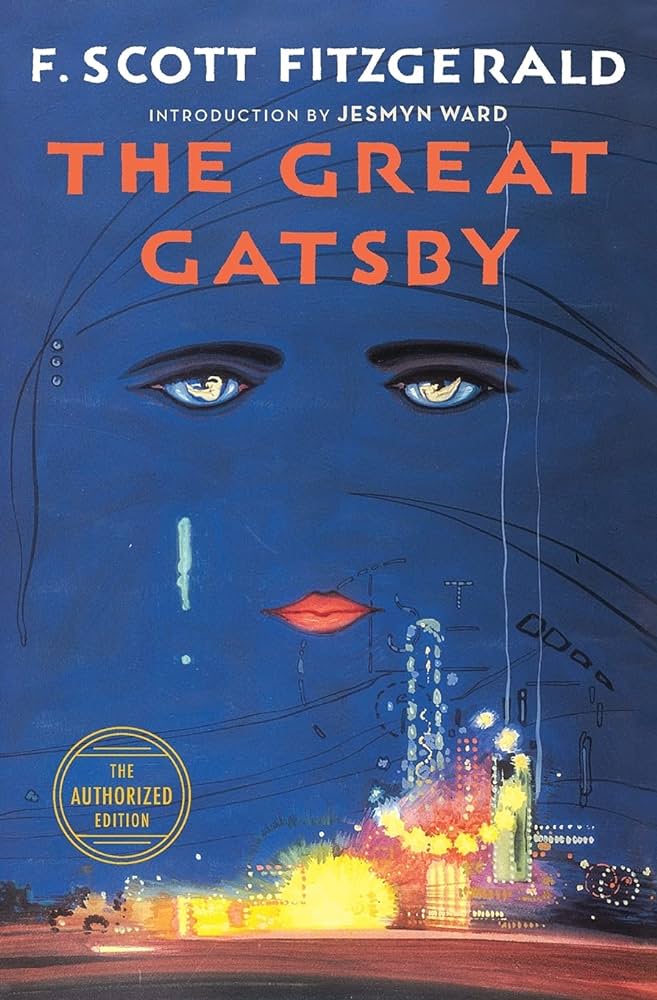
F. Scott Fitzgerald’s novel, The Great Gatsby, was both a product of, and epitaph for, the Jazz Age of the Roaring ’20s. Journey to West and East Egg again, as your host Rick Reiman narrates one of the great American novels of the twentieth (or any other) century.
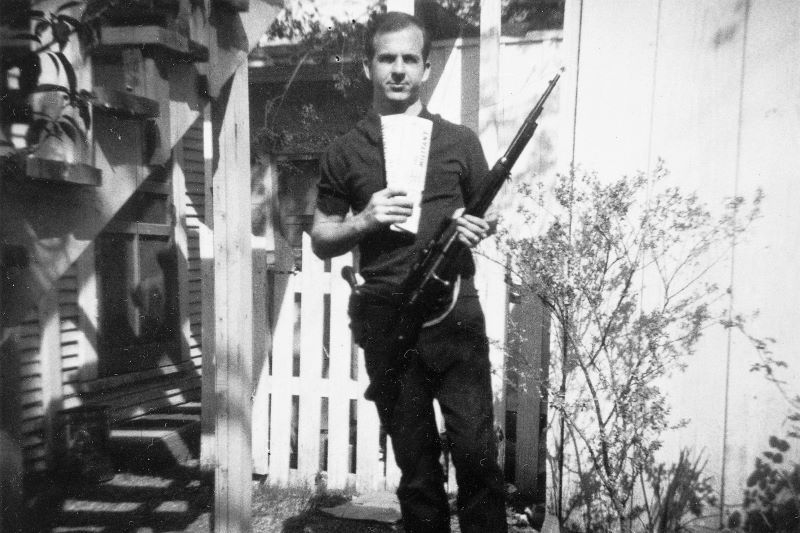
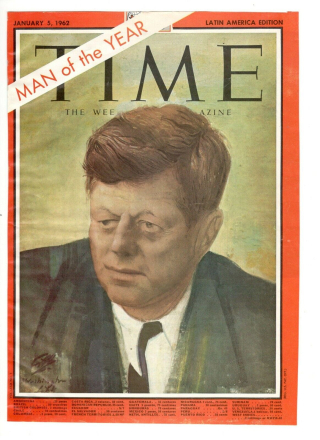
Today is November 20, 2023, two days before the 60th anniversary of the assassination of President John F. Kennedy. On the eve of this event, we look at the flagship government investigation of the crime, the Warren Commission and its work. Ironies abound in discussing the Commission. Its Report has been savaged by many, most of whom have failed even to read it. Critics, beginning with the conspiracy “buffs,” have largely cherrypicked the twenty-seven volumes of the documents and hearing transcripts for evidence in support of their claims, or for evidence that could be made to support their claims with sufficient imagination and blinders to ignore the other documents and testimony in the same volumes that counter their claims. So it is with the Commission’s alleged “mistakes.” In this two-part reflection on the work of the Warren Commission (1963-1964), we look at the Commission’s supposed errors or “mistakes,” and separate its actual failings from “unavoidable inabilities,” which, as we hear in this podcast, are not the same thing.
Part Two of this reflection series will focus on the strengths of the Warren Commission, strengths so powerful that they have survived three generations of scrutiny since that terrible day in Dallas.
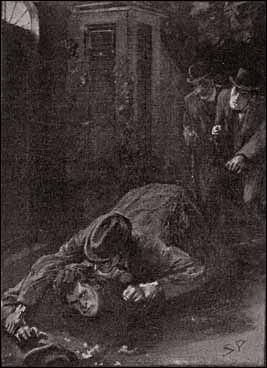
You may have seen and heard the classic story of “The Disappearance of Lady Frances Carfax” here on History Revisited and Audibly Speaking before, but this is a new version, now with annotations included from the observations in Leslie S. Klinger’s The New Annotated Sherlock Holmes, Volume II (New York: Norton’s, 2005). Listen to the story and the annotated digressions to journey through the dual labyrinths of the plot-line and the mind of Arthur Conan Doyle, in this, one of my all-time-favorites in the Sherlock Holmes canon!
In the run up to Halloween, there no more terrifying, thrilling and horrifying story in the Sherlock Holmes canon than this, “The Cardboard Box.” Publishers were frightened to publish it and its author, John Watson, was persuaded to do so only on his deathbed. Listeners are strongly encouraged to listen only at noon, in the bright sunshine, when demons are at a distance and vampires asleep in their coffins. If you must listen to this of an evening, have someone with you to hold onto. Listen…if you dare.
In advance of the publication of Paul Landis’s new book on his memory as a Secret Service agent in the JFK detail on November 22, 1963, Landis has made a claim that has roiled the class of people interested in the controversies involving the JFK assassination. In response to those parts of the claim that have been published (since the book itself will not come out until October) your host for this podcast, Rick Reiman, looks at the logical problems of the Landis claim, and why it should be considered little more than a myth and a mistaken memory.
This is Dr. Rick Reiman, professor of History at South Georgia State College. Here I narrate sections from the National Archives’ public domain publication, “Putting the Bill of Rights to the Test.” I read sections on the application of the First and Fifth Amendments. Listeners are encouraged to download the complete publication on the National Archives web site. The complete publication contains questions and primary documents that will enhance your experience in listening to this podcast episode and learning more about the Constitution.
Here is my review of the blockbuster movie by Christopher Nolan, “Oppenheimer.” It is a tour de force for so many reasons, but gaps in Oppenheimer’s biography still remains, as I try to show in this review.
In 1940, American democracy was gravely threatened as never before, and only the American people stood against it as a reliable line of defense. Could we say the same today if American democracy were similarly threatened? Here is an analysis of the famous “Arsenal of Democracy” speech, annotated by your host, Rick Reiman
A Russian Count and his mysterious son make an appointment with a doctor to examine the Count for catalepsy. Catalepsy being the doctor’s speciality, it makes sense. But the resident patient who lives at the doctor’s office may have a lively, or is it deadly, interest in the Russian visitors, unbeknownst to the doctor. What could possibly go wrong? Everything, unless Sherlock Holmes can penetrate the fog of crime in this short story by the inimitable Conan Doyle.
Your audio narrator, Rick Reiman, takes you from London to the English Midlands, as we journey with Sherlock Holmes, Dr. Watson and “the stockbroker’s clerk,” in quest of the solution to a mystery and a hideous crime. Sherlock Holmes solves it only at the very end, and only with the aid of one of the criminals involved. See, or rather hear, if you can beat him to it.
The odyssey is almost complete: Virtually the entire canon of Sherlock Holmes stories by Conan Doyle have now been recorded, available free to the public, by the work and from the voice of audio narrator Rick Reiman. You can also catch the classic Hound of the Baskervilles, either here on AudiblySpeaking (available at the podcast by that name on Apple Podcasts) or at Librivox.org. This is an other-directed public service worthy of the spirit of the eighteenth century Enlightenment. Here is “The Disappearance of Lady Frances Carfax,” for your enjoyment.
Other than horse-racing, this is is the only Sherlock Holmes story featuring sports. In this case it is a missing football player, not a race horse, that confounds Holmes. Listen to this preview now. The complete audio narration will be released on June 1. Get the jump with this swift and breezy preview, now.
My Sherlock Holmes short story audio narrations are reaching completion! Here is a compendium of all my audio recordings in this treasure chest of Arthur Conan Doyle stories, all free for the listening!
Inspector Lastrade of Scotland Yard informs Holmes that someone is robbing people’s houses of their busts of Napoleon and smashing them to bits in situ or a little distance away. What can be the meaning of this? Lastrade only really becomes interested when the affair is entangled in murder–the burglar knifed an Italian on his way out of a burgled house, and the dead man had a photo of the likely murdered in his pocket. Holmes continues to center his attention on the busts, not the dead man, a fact that Lastrade considers mad. As usual, Holmes is proven right in the denouement, a fact which can only be made clear by Holmes’s dazzlingly ingenious methods, as is revealed at the conclusion of the story.
Peter Carey, an English Sea Captain, with the reputation of being tyrannical and hard-hearted, is given the name “Black Peter” before he is killed by an unknown visitor to his home. Sherlock Holmes must help the novice detective, Stanley Hopkins, unravel the mystery of Peter Carey’s strange ending. Sir Arthur Conan Doyle sprinkles clues to enable the reader the understand that Hopkins is too quick to close a case that only Sherlock Holmes can solve.
“The Adventure of the Copper Beeches” was the last short story published in Conan Doyle’s first book-length collection of short stories, The Adventures of Sherlock Holmes (1892). It does not follow the usual pattern of opening with a brief Sherlock Holmes deduction that shows his brilliance, but focuses on Holmes’s tendency toward morose depression. Holmes complains to Watson that his clients are so dull that he is left to advice people on how to find lost lead pencils and ladies on how to secure such positions as governess. He shows Watson that he has really reached “Zero” with the case of Violet Hunter, who seeks advice on whether to become governess to Jephro Rucastle. The case turns out to be more diabolical and potentially deadly than even Holmes can imagine. Violet also turns out to be cut from the Sherlockian cloth as her own deductions and limitless curiosity plunges her into pathbreaking pages of discovery and drama. Watson even suspects that Holmes may fall in love with her. But the autistic detective remains a bachelor, and turns away from her in disinterest once she is no longer “at the center” of one of his cases. As for Holmes and Watson, they open the story criticizing each other like a tired married couple, and only grow united in purpose once Violet Hunter delivers them a mystery that brings the dynamic duo once together once more in pursuit of a game once again “afoot.”
Here is my “take” on one of the most famous novels of all time, “A Tale of Two Cities,” by Charles Dickens. Why is it so great? What the dickens was Dickens up to when he wrote it? And what should be our takeaway today. Tune in here, and listen, learn and, most importantly, enjoy!
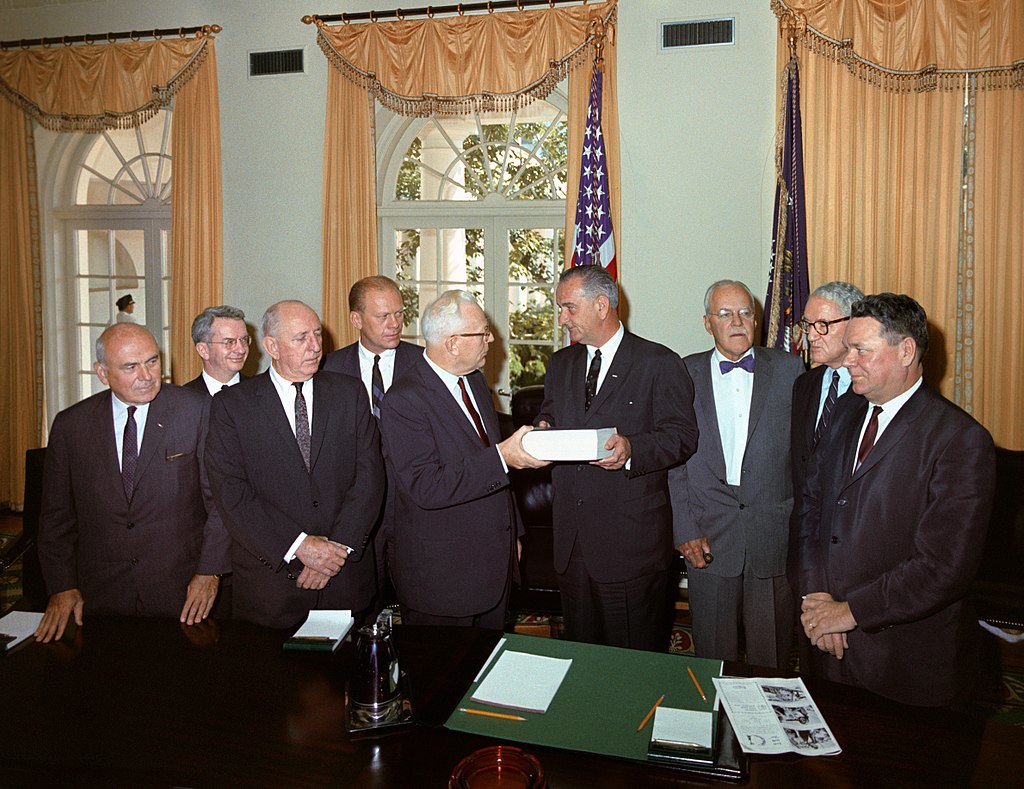
In this, our second episode of “Puzzle Pieces,” in which we examine a separate mystery in American history, we look at the weaknesses of the Warren Commission’s efforts in 1964. This first investigation of the JFK assassination suffered from mistakes of its own making and errors over which it had little if no control whatsoever. Weaknesses could sometimes later become strengths, as their obvious highlighting could be–and were–addressed in subsequent investigations. Here we have a photograph of the Commissioners themselves–who did very little of the leg work for the Commission. The unsung staff did most of the work, and may be credited with many of the Commission’s monumental, if unsung and forgotten, successes. Next time on “Puzzle Pieces,” we go over those successes–here on AudiblySpeaking.
The Warren Commission delivers its Report, September 1964
Your host, Rick Reiman, narrates “The Adventure of the Engineer’s Thumb,” by Arthur Conan Doyle. This is rather one of the more graphic of the Sherlock Holmes tales, not for the faint of heart. But it contains several of Holmes’s most ingenious deductions along the way. My narrations of the Holmes stories must be nearing an end, since there are few of them that I have not yet read and released on Audibly Speaking thus far. I hope that you enjoy it.