How should we think about the danger and possible utility (?) of “Artificial Intelligence,” that increasingly out-of-control oxymoron? Maybe a report from the field is in order as we begin to look at this question. This is that report from the field, or at least a beginning of one. We may have to start early because we have no time to waste, for the sake of student learning, in getting this right.
Ai is perhaps the ruination of higher education, at least as it is currently being used by many students with a shameless push from the new barbarians at the gates, the techies who come up with this stuff and promise that it will solve all the individuals woes and help them “succeed” in school. Well, evidently “success’ does not include learning, because there is no more effective if deadly way to squelch learning than through machine learning, where only the machine “learns,” not the luckless human who puts it through its paces.
Stephen Fry, the great British writer, condemns AI’s cost to creativity in a Youtube Video that says it far better than can I:
No one, going back to the interpretation of William Gillette in the early years of the silent screen cinema, interpreted the Sherlock Holmes character with the authenticity that Jeremy Brett brought to the role in the ITV Granada series on British television (1984-1994). That series went back to the canonical short stories and lovingly adapted them to the screen, clearing away the distortions that past (and future) representations have rained down and continue to rain on the reputation of the detective. This new recording is my latest attempt to interpret the Sherlockian short stories in a twenty-first century podcast adaptation, with respect to the great interpreters of the past, going back to Doyle, the originator himself, and moving forward to Brett. With apologies to Jeremy Brett, here is my acting effort to portray the style of Jeremy Brett in a Holmesian short story that Brett was not to portray in the TV Series (that series failing to film ALL of the short stories). One of the best of the stories that it left out was “The Reigate Squires,” from The Memoirs of Sherlock Holmes. And so, here is an attempted corrective to that omission, in the form of a pastiche of Jeremy Brett portraying the famous detective in the real Conan Doyle short story, “The Reigate Squires.”
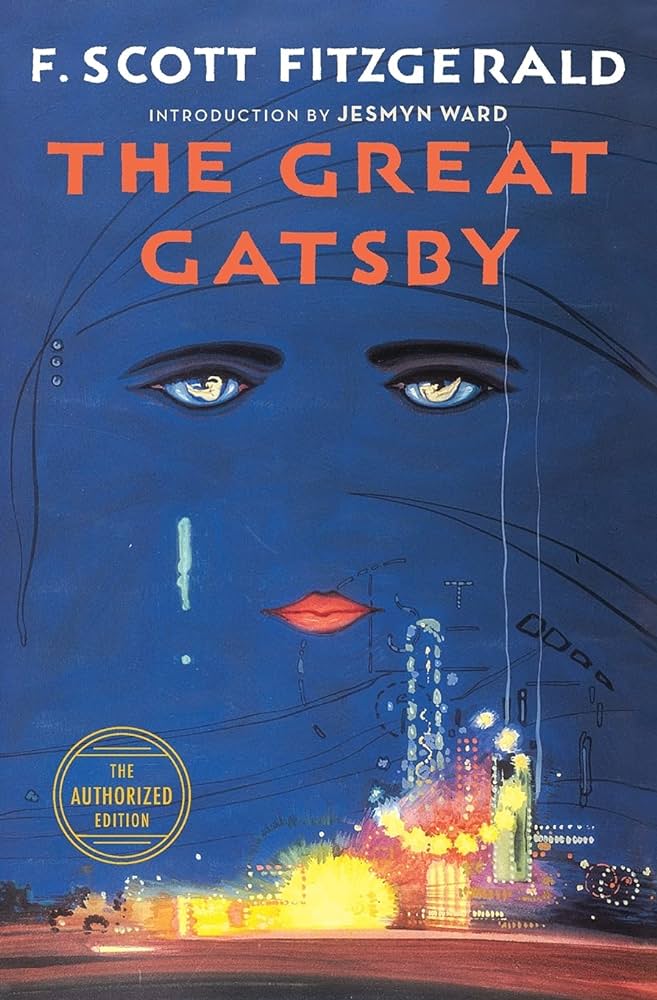
In this year of 2025, we celebrate the centennial of F. Scott Fitzgerald’s The Great Gatsby. I have recorded the first three chapters of the heartbreaking novel, and the latest chapter is out today! I have links to all three chapters below should you wish to listen to them in order. Perhaps you, too, admire the green light on the far horizon. Watch out, because it may be the chimera of the “American Dream,” an apparition best left in quotation marks as airy as the cocktails on Gatsby’s West Egg veranda.
In 1922, Sir Arthur Conan Doyle capped his marvelous series of Sherlock Holmes story with an entry in the series to rival any of his best: “The Problem of Thor Bridge.” How fitting that Doyle’s last great Holmes story may be the final Holmes story narrated by yours truly, Rick Reiman, for I am moving on to other academic contributions that may better suit my talents and more greatly increase the sum of my contributions to academic learning in these, the two thousands and twenties.
In our post-truth world, ignorance about Medicare has reached avalanche proportions. The greatest and most secure health care system in the world is now suffering the slings and arrows of outrageous fortune in the form of babbling malcontents whose ignorance of Medicare is only matched by their outrage at it. Just go to Facebook or some other social media cesspool and you will see a lot of such heat, but precious little light. Medicare complainers, please heal yourselves and do a little, or preferably a lot, of research. Please!
In this final episode about my opinions and experience with learning Medicare for retirement, I spread the word that many people are talking about: Medicare Advantage plans and Part D Prescription Drug plans are undergoing big changes, premium hikes and in some cases disappearing acts during this Annual Election Period between October 15 and December 7. If you are on Medicare Advantage OR a Part D prescription drug plan (you can’t be on both) you need to research Medicare.gov to see if you have a plan that will continue to have the same benefits and premiums as in 2024. In most cases, benefits are going down, premiums are going up and some plans are actually shutting down. Watch the Youtube videos by Mathew Claassen on Medicare for expert and accurate advice to follow. This episode is only my opinion and personal experience. It may not be yours.
What in the world is Part D? My personal experience learning what I appreciated to find out about Medicare Part D coverage is the subject of this this brief podcast episode. Disclaimer: These are my opinions and what my impressions were. This is no substitute or necessarily as accurate as your doing your own research on Medicare. It is just an opinion piece on my reflections of my own experience.
Medicare is confusing– what an understatement. Two years out from retirement I decided to try to understand it, suspecting that it might take me that long. I was not wrong! Now that I am retired and am now on Medicare, I tell this slightly autobiographical tale of what I think I have learned about Medicare in hope that it will either be interesting to or helpful for others, whichever the case may be.
F. Scott Fitzgerald’s novel, The Great Gatsby, was both a product of, and epitaph for, the Jazz Age of the Roaring ’20s. Journey to West and East Egg again, as your host Rick Reiman narrates one of the great American novels of the twentieth (or any other) century.
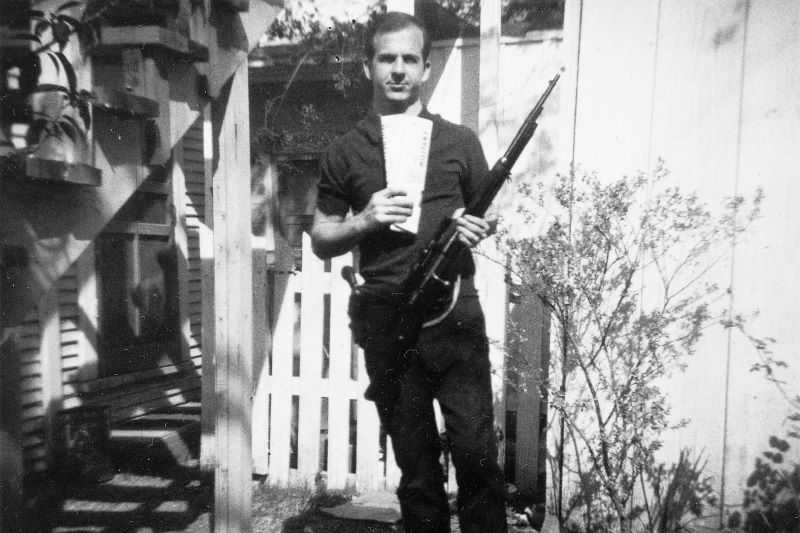
This is your host on “Audibly Speaking,” Rick Reiman. Today, March 31, 2023, is the 60th anniversary of the taking of the famous backyard photographs of Lee Harvey Oswald, holding the rifle he would later use to kill President Kennedy and the pistol he would use to murder Officer J.D. Tippit forty-five minutes after that awful act in American history. This is a classic case of how historians untangle facts from allegations, and how the facts in the JFK assassination are imagined away and replaced by the will-of-the-wisp of “What-Ifs.” Let this year, the 60th anniversary of that dark day be the year we start listening to most historians, rather then the inhabitants of “Dallas in Wonderland,” with their absurd conspiracy theories. Thanks for listening–and please share this with others if you like it!
Oswald in the back of his house on Neely Street in Oak Cliff, March 31, 1963. Picture taken by his wife, Marina Oswald.
In this unabridged audio narration, I read my article for The Journal of Perpetrator Research (2019) Vol: 2 Issue: 2. There were only three actual “shots” in Dealey Plaza on that dark day, of course. They were the bullets fired by Lee Harvey Oswald from the sixth floor of the Texas School Book Depository building. But photographs are also metaphoric “shots,” and three were captured in the same seconds that the rifle blasts rang out, by the Dallas dressmaker Abraham Zapruder with his 35-millimeter Bell and Howell Zoomatic camera. Three frames from this 26-second film represented the key photographs in this case, and they were to reverberate throughout American culture for decades to come. They were at once reflections, projections and evidence, as this article reveals.
This is my audio narration of my book review of Paul R. Gregory’s The Oswalds: An Untold Account of Marina and Lee, a newly published account of Gregory’s brush with Lee and Marina Oswald in 1962, a year before the assassination of President John F. Kennedy. Listeners can read the full review, of which this is an unabridged recording, at http://www.washingtondecoded.com.
Join Holmes and Watson, and a sound show of horses hooves, Watson typing, and a crackling fire on a stormy night in Baker Street, as Holmes and Watson embark on one of their creepiest mysteries of the Sherlock Holmes canon!
In 2006, Prof. Aleida Assmann, the premier authority in the field of Cultural Memory, explained how memory works at different levels and in different formats. Here is a summary of her 2006 article, “Reframing Memory,” which dissects the different kinds of memory and how it is a special view to argue, as some academics have, that there is, and can be, no such thing as collective memory. This is my summary of her argument. Any errors in “translation” are mine alone. –Richard Reiman
This is a reading of Chapter 16, on Capital and Labor, of The American Yawp, a free Open Educational Resource U.S. History textbook. This reading is by Dr. Richard Reiman, Ph.D., History.
This is a reading of Chapter 15, on Reconstruction, of The American Yawp, a free Open Educational Resource U.S. History textbook. This reading is by Dr. Richard Reiman, Ph.D., History.
Arthur Conan Doyle intended this story to be his final official entry in the Holmes canon. He later added “The Adventure of the Second Stain” (also in this narrated collection) to serve that distinctive role. Holmes and Watson spar over the latter’s dramatic depiction of Holmes’s detective methods and Holmes uncharacteristically gets on Watson’s nerves. Holmes’s brilliance is nevertheless on full display in this entry. Watson should have remembered that Sherlock Holmes is a package deal; if you want the genius, you must accept the eccentricity. As the final entry in my series of narrations of the Holmes stories (for awhile) this one naturally is the most skillfully done. Since one learns to improve with each effort, how could it not be? On a personal note, as I now know, the first half of the recording was made on the eve of my first positive test for Covid-19. The second half of the recording was made while emerging from the ordeal. I could not allow Covid to stop me; after all, “the game was afoot,” in the words of Sherlock Holmes!
Read by Rick Reiman. In this story, one of Doyle’s favorites, Sherlock Holmes must avert a European war by solving a mystery absolutely befuddling to all but this greatest “consulting detective” of all time. At once full of high tension and broad comedy, the autistic Holmes must navigate through the tangling murky politics of sexual relations, diplomacy and, yes, international politics itself.